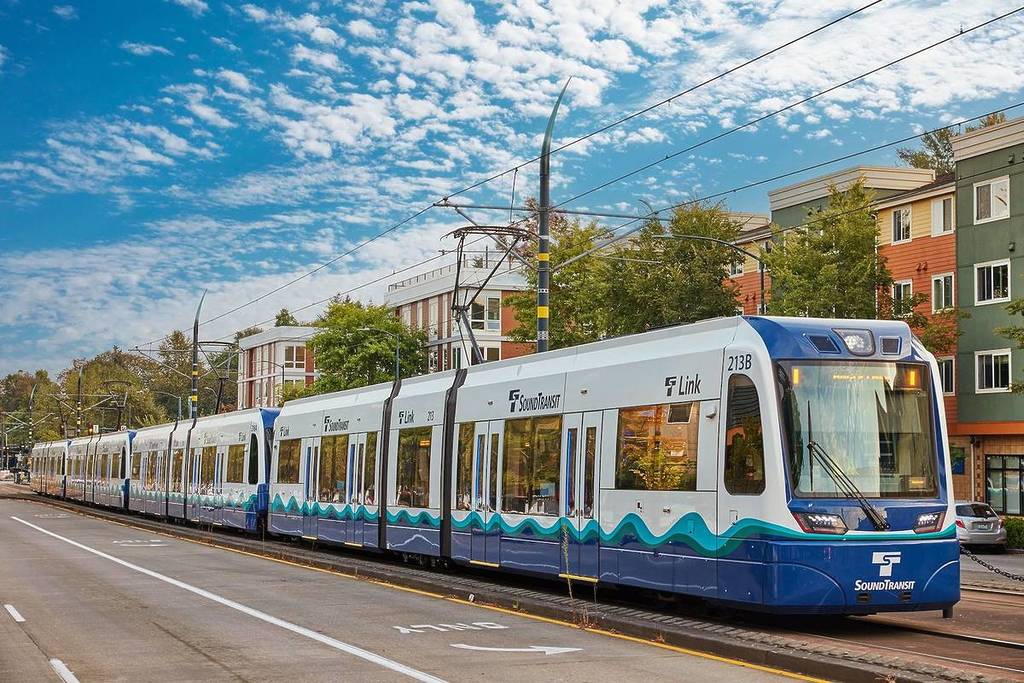

Seattle’s light rail system just hit a major milestone. According to federal transit data, Seattle-area light rail and streetcar lines carried more riders in April than any other light rail system in the United States.
The region recorded 4.8 million riders in April, setting a new monthly record and even surpassing larger cities such as Los Angeles. Much of that growth came after Sound Transit opened its long-awaited light rail connection between Seattle and Bellevue in late March. The project made history as the first light rail line to cross Lake Washington on a floating bridge.
Urban Institute researcher Yonah Freemark highlighted the achievement in a social media post:
“Seattle’s light rail & streetcar lines carried 4.8 million riders in April—a 44% increase above March, after Link Line 2 was extended to connect Seattle & Bellevue across Lake Washington.”
He added:
“Seattle’s light rail & streetcar lines are now the most-ridden in the nation, above LA, Boston, or San Diego.”
There is an important catch, though. Seattle ranks No. 1 only among light rail systems. Cities with heavy-rail subway networks, such as New York, Washington, D.C., and Boston, still had much higher overall rail ridership. Seattle ranked eighth among U.S. urban areas when all rail types are counted (including heavy rail and commuter rail).
That’s still impressive considering Seattle has only the nation’s 15th-largest metro population. Larger metro areas such as Houston, Atlanta, Miami, Phoenix, Detroit, and Dallas all had lower rail ridership.
Sound Transit notes that March and April figures are still preliminary, but the trend is clear. Average daily ridership reached about 155,000 in April and May, up from 122,600 in February and roughly 107,000 a year earlier.
Ridership is expected to keep climbing. As The Urbanist notes, “Even though West Seattle and Tacoma Dome light rail extensions are not expected to open until the mid 2030s, Link light rail is still likely to continue to see ridership growth in the interim period from network effects, population growth, greater public awareness, and shifting travel habits.”
Even with some planned expansions delayed, Sound Transit projects nearly 600,000 daily riders in the near future—a level that could make Seattle second only to New York City in rail ridership.