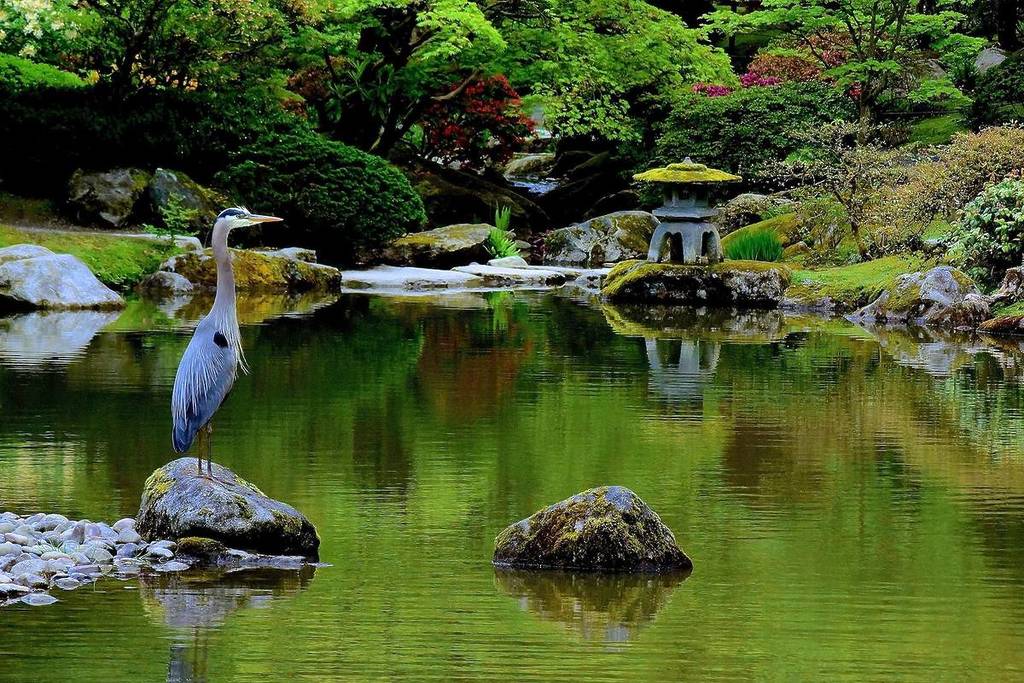

Seattle Parks and Recreation announced this week that the beloved Seattle Japanese Garden will temporarily close this summer for a major restoration project aimed at preserving its historic design and improving long-term stability. The closure, coordinated by Seattle Parks and Recreation and the Arboretum Foundation, will run from June 22 through July 27, 2026, with the garden reopening on July 28 under its regular Tuesday–Sunday schedule.
The project centers on replacing a deteriorating retaining wall at the garden’s north end. During the five-week full closure, crews will remove the existing basalt wall and prepare the site for reconstruction. Even after reopening, the north section will remain closed through November 2026 as work continues, with visitors likely to notice periodic construction noise and activity.
The restoration will feature a new granite wall built using traditional Japanese Ishigaki stone masonry, a technique historically used in gardens and castles. Leading the work is Suminori Awata, a fifteenth-generation stonemason whose involvement ensures authenticity and craftsmanship rooted in centuries-old tradition. The project will also include new stairways, improved accessibility, and restoration planting that reflects the garden’s original landscape design.
Although visitors won’t be able to enter the garden during the initial closure, those visiting after July 28 may have a rare opportunity to observe Awata at work on the stone wall during certain times.
“This offers a unique chance to see traditional Japanese stone masonry techniques being practiced in real time while an important restoration project is underway,” the press release stated.
While the Seattle Japanese Garden undergoes restoration, the surrounding Washington Park Arboretum remains open with free entry as usual. You can also plan an alternative visit to Kubota Garden (a 20-acre Japanese garden in the Rainier Beach) or the Seattle Chinese Garden (a nearly 5-acre garden at the north end of the South Seattle College campus in West Seattle)—both offer free entry.