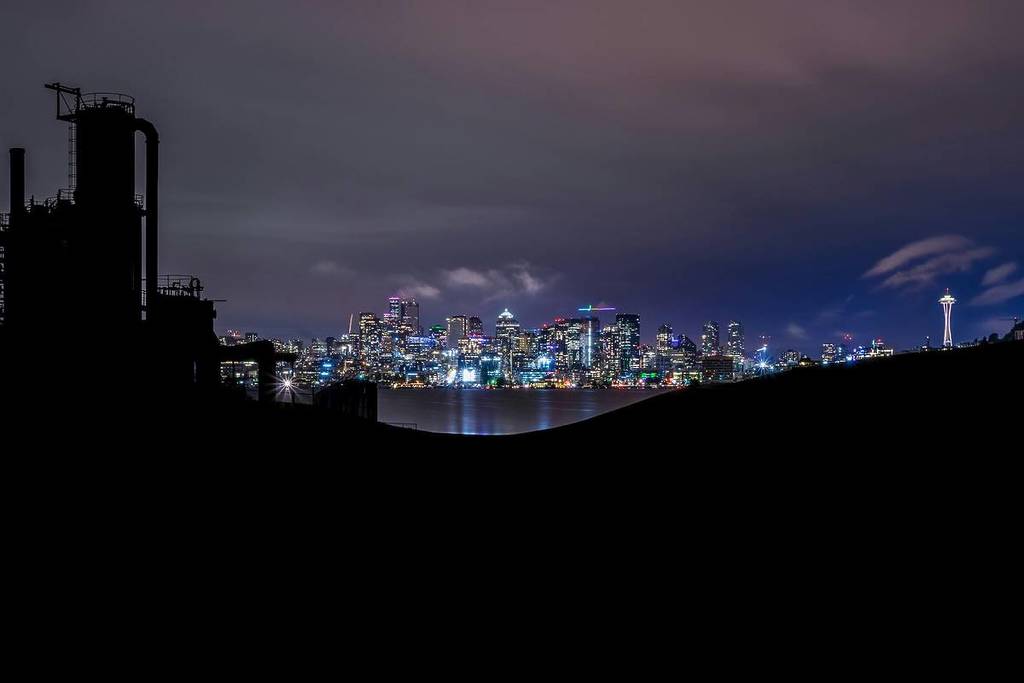
Seattle’s night sky will see a rare phenomenon tonight that won’t happen again for another three years: a Black Moon. Although you won’t actually be able to see the Black Moon, since it is a new moon, it does provide excellent conditions for star gazing. It may also have a surprising affect on your circadian rhythm, according to research.
Read on for all the details.
What is a Black Moon?
The term “Black Moon” is less of an official astronomical term and more rooted in folklore. According to EarthSky.org, “journalists and astronomy buffs have begun using the name Black Moon for the second new moon in a single month.” It’s similar to Blue Moon, which refers to the rare occurrence of a second full moon in a month (hence the phrase, “once in a blue moon”). Meanwhile, Space.com defines a Black Moon as “the third new moon in a season that will see four new moons.”
How rare is a Black Moon?
Tonight’s Black Moon is a very rare occurrence. Axios calls it “the rarest of summer moons” and notes that it only happens about once every 33 months. This won’t happen again until August 2028!
Why is tonight’s Black Moon good for star gazing?
A new moon such as tonight’s Black Moon allows for excellent star gazing conditions thanks to the lack of moonlight. Furthermore, the Perseid meteor shower is currently active until August 23, so you may get to see some shooting stars. And if you stay up very late or wake up very early, you may also be able to see a lineup of planets in the east before dawn. Just remember that if you plan to do some star gazing, you’ll want to move as far away as possible from city lights.
Can tonight’s Black Moon affect my sleep or mood?
According to researchers, the answer to that question could be yes. In speaking with David Avery, professor emeritus at the University of Washington School of Medicine, Axios learned that research has found that “the Moon’s subtle gravitational and possible geomagnetic pull may be nudging the body’s circadian clock.” So if you struggle to fall asleep tonight, blame the moon.