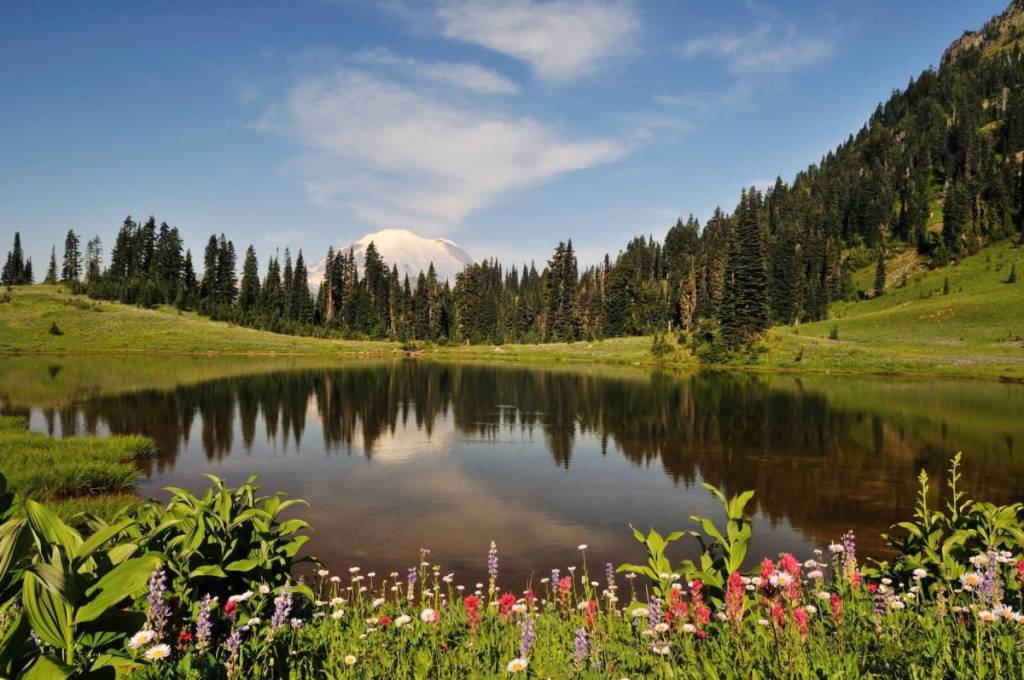

If you’ve been waiting for the perfect excuse to head to Mount Rainier National Park, this is it. The park’s legendary alpine wildflower season is reaching its peak, turning the subalpine meadows around Paradise and Sunrise into a stunning patchwork of color.
From mid-July through late August—with peak blooms typically arriving in August—the mountain comes alive with vibrant purple lupines, fiery magenta paintbrushes, creamy avalanche lilies, and dozens of other native wildflowers. It’s one of Washington’s most spectacular seasonal displays, drawing hikers, photographers, and families from across the Pacific Northwest.
One of the best ways to experience the bloom is on the Alta Vista Trail, a scenic loop that takes about three hours at a leisurely pace, including time to stop for photos and soak in the views. Starting near Paradise, this easy-to-moderate hike offers sweeping vistas of Mount Rainier surrounded by colorful meadows, making it a favorite for visitors of all ages. Just note that this popular trail can also be one of the most crowded.
There are plenty of other great wildflower hikes to explore as well. Reflection Lakes pairs vibrant blooms with postcard-worthy reflections of Mount Rainier, while Grand Park features one of the park’s largest wildflower meadows. Other excellent options include Naches Loop, Summerland, and Dege Peak. All of the above trails offer beautiful wildflower displays with easy to moderate difficulty, so all ages can enjoy. For experienced hikers looking for more of a challenge, the scenic but strenuous Skyline Trail climbs higher into the alpine landscape and serves as the gateway to Panorama Point.
As breathtaking as the wildflowers are, park rangers want visitors to remember that they’re also incredibly fragile. Staying on marked trails is essential, as even a single off-trail footprint can damage delicate subalpine plants that may take decades to recover. It’s a simple step that helps preserve these remarkable meadows for future visitors.