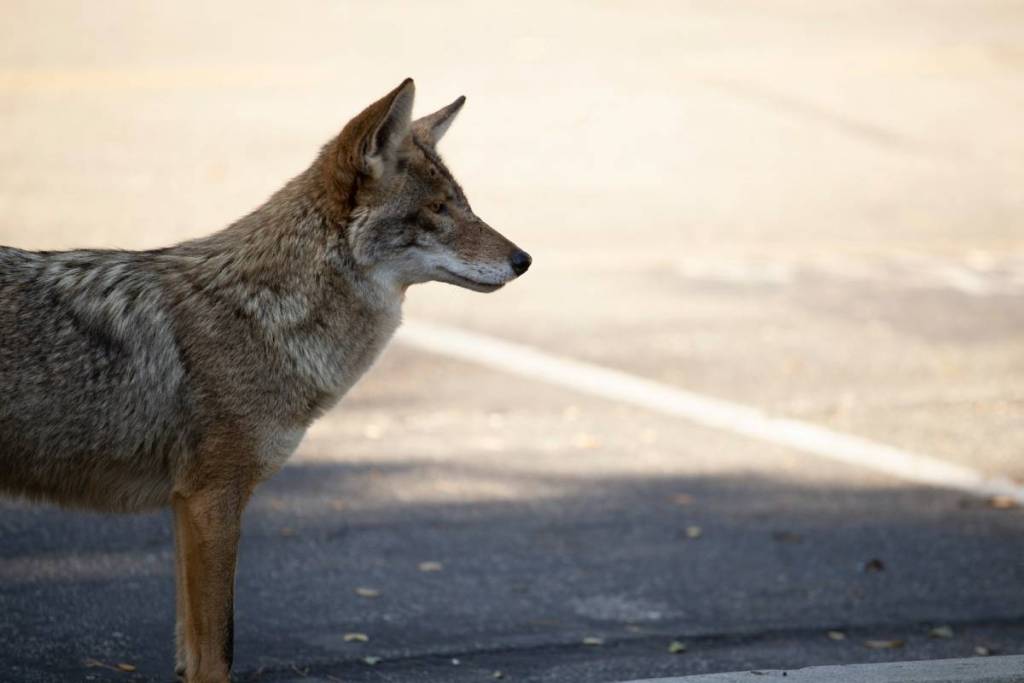

Seattle may be known for its coffee, rain, and evergreen trees, but it’s also home to a surprisingly large coyote population. In fact, researchers estimate that coyote density in Seattle is about nine times higher than in some of Washington’s wild areas.
So, why are coyotes thriving in the Emerald City?
It’s not just Seattle. Coyotes have gradually expanded into nearly every major metropolitan area in North America. Chicago is estimated to have thousands of coyotes, while Los Angeles has also recorded much higher coyote densities in urban areas than in surrounding wildlands. Urban areas provide plenty of food and fewer natural predators. And in Seattle, a growing rabbit population may have helped create an attractive food source.
A recent study published in Environmental Research: Ecology offers a closer look at Seattle’s coyotes, as reported by UW News. Researchers collected 842 coyote scat samples from Seattle and two rural areas near Winthrop and Chewelah, identifying an estimated 261 individual animals. Their analysis found that Seattle had roughly nine times the coyote density of the rural areas.
Interestingly, researchers found that human population density was the main factor linked to coyote density within Seattle. Other factors, including tree cover, roads, buildings and pollution, showed less of an effect. The higher the human density, however, the lower the coyote density was. Coyotes generally avoid people, but sightings are becoming increasingly common, including during daylight hours.
Cars and disease are among the biggest threats to urban coyotes, while territorial fights between coyotes may naturally limit how many can live in the city. Researchers still don’t know whether Seattle has reached its maximum coyote population. What’s clear is that Seattle’s urban landscape provides coyotes with many of the resources they need to survive and thrive, so we will have to learn to coexist.